
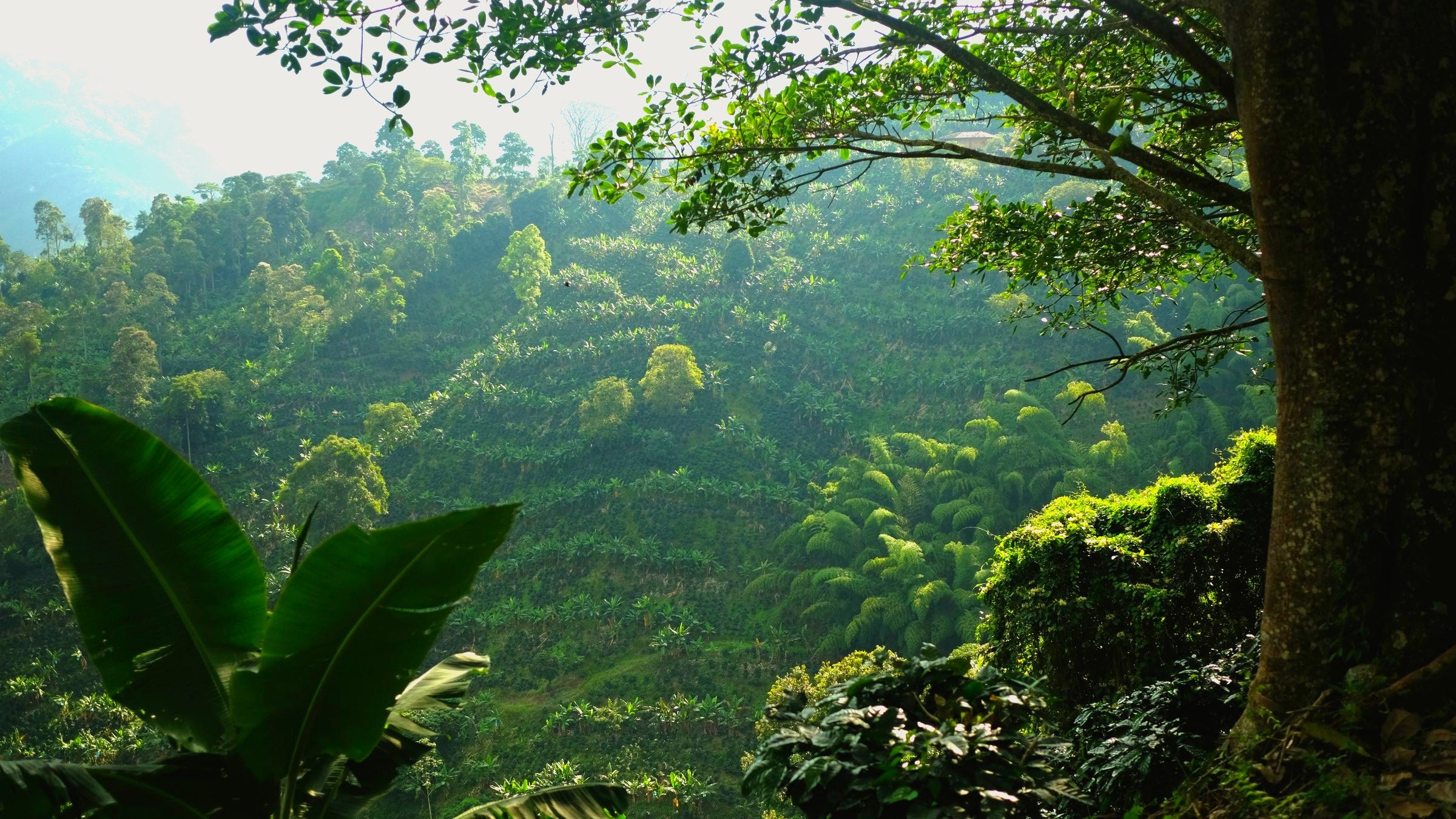
Altitude changes the taste of coffee for a simple reason: higher up it is colder, and in the cold the fruit ripens more slowly. A cherry that takes longer to ripen builds up more sugars and more organic acids, and the bean ends up denser. That is what you taste: more acidity, more sweetness, a more defined flavour.
There is no magic and no marketing in it. It is the same logic as cold-climate fruit: a mountain apple and a valley apple do not taste alike, even from the same tree.
What changes, metre by metre
| Altitude | Ripening | What tends to show |
|---|---|---|
| Below 1,200 m | fast | heavy body, little acidity, flat flavour |
| 1,200 – 1,500 m | medium | balance, moderate sweetness |
| Above 1,500 m | slow | marked acidity, sweetness, denser bean |
The ranges are indicative and they are not a quality scale. Altitude on its own does not make a coffee good: a bean from 1,800 metres badly picked, badly fermented or badly dried is a bad coffee with a nice view. Altitude gives potential; the craft either delivers it or wastes it.
Why altitude matters so much in Quindío
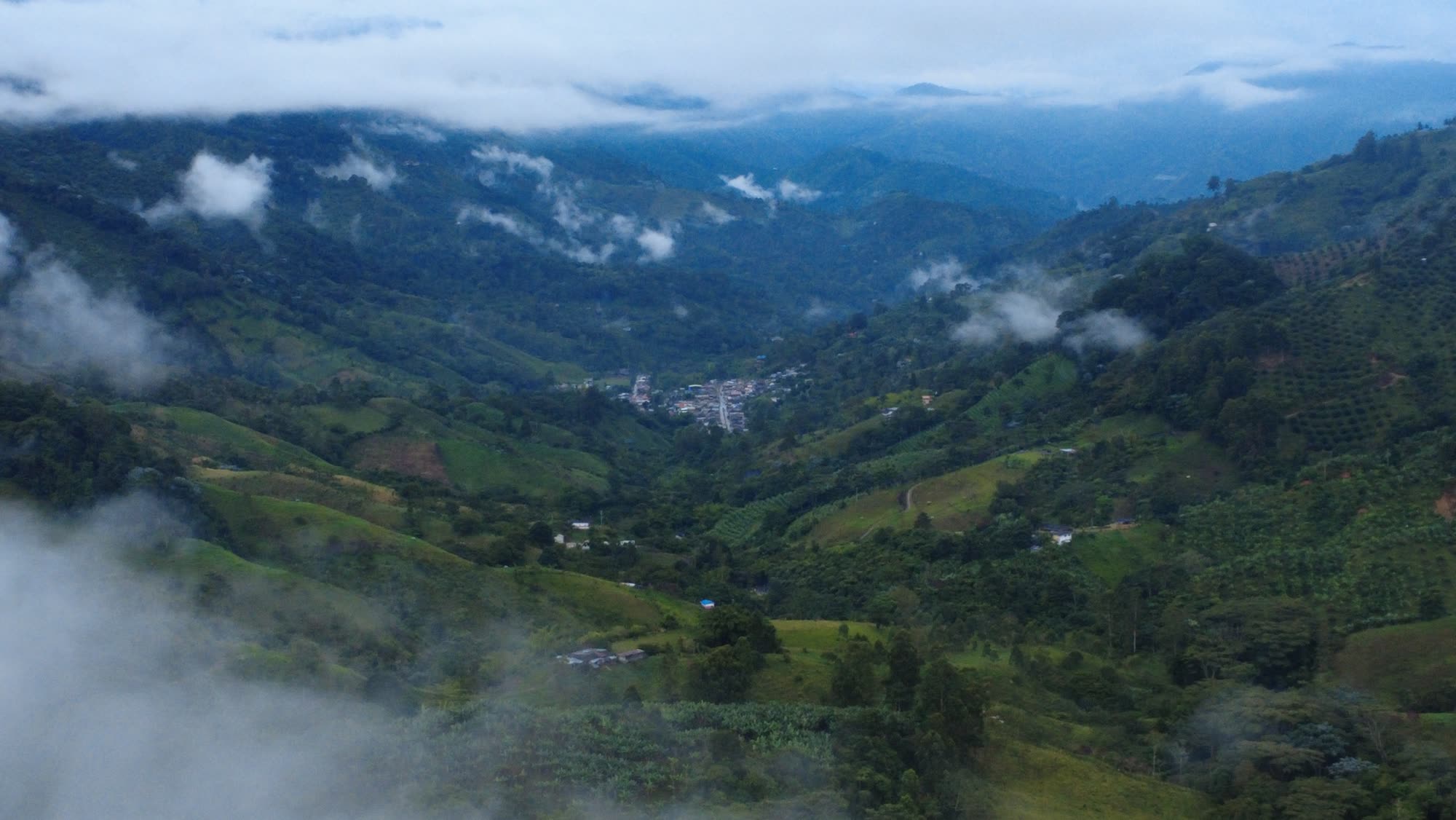
Colombia has an unusual advantage: it sits on the equator, so it has no seasons. Where winter halts the tree's cycle in other countries, here the coffee tree can produce all year round, and what sets the rhythm is not the season but the rain and the altitude of each slope.
In Pijao coffee grows above 1,500 metres. The temperature in the town stays almost always between 18 and 24 °C, and it rises and falls as you climb the mountain. That is why, within one farm, a lot up top and a lot down below are different coffees.
The long farm
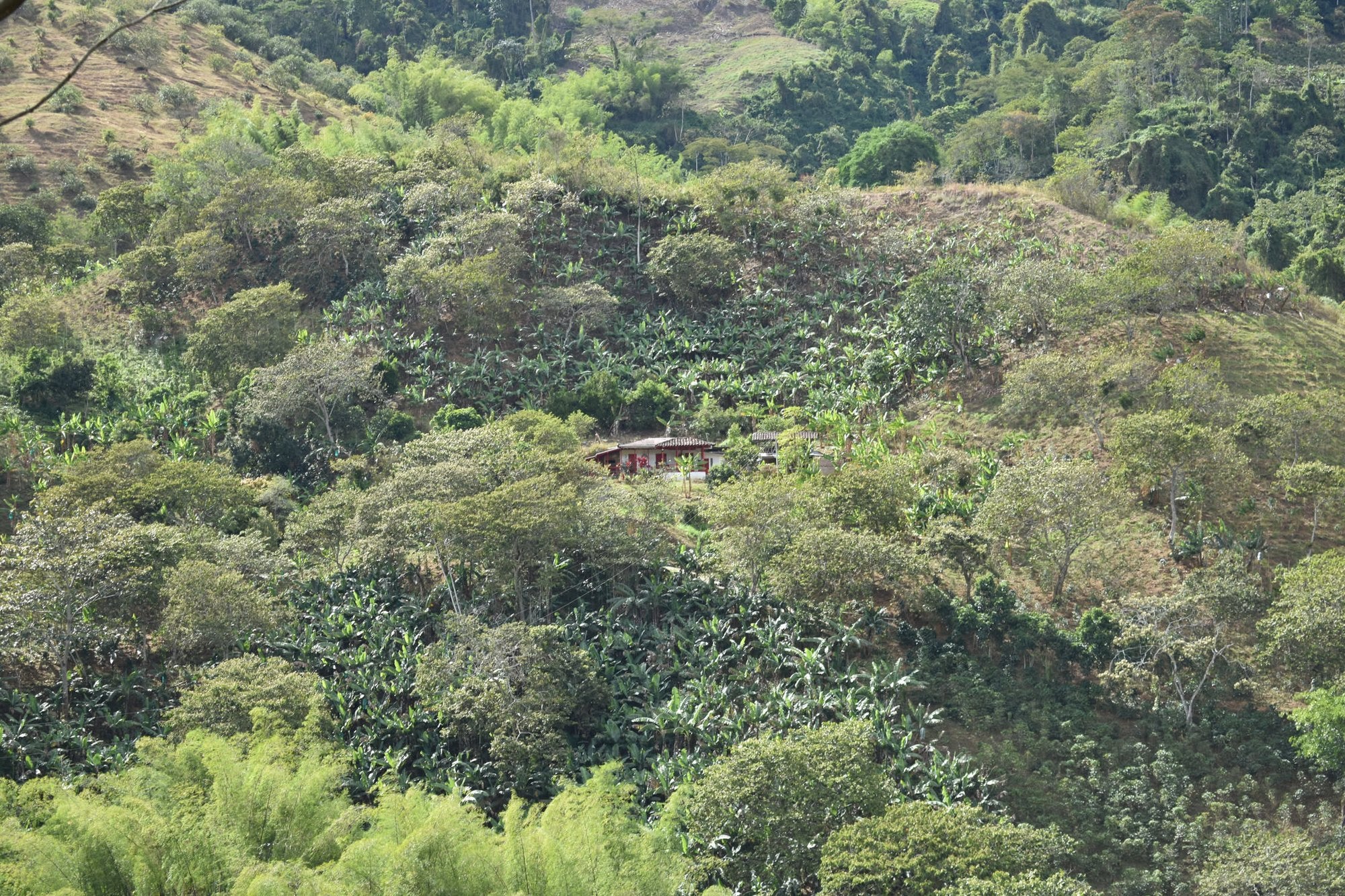
Villa Gloria is a good example. The reference figure is 1,550 metres above sea level, but the farm runs from the river to the top of a mountain: in practice there are lots between 1,300 and 1,700 metres. It is the reason two lots of the same variety and the same process may not quite match.
When a coffee is sold as micro-lots instead of blending everything together, that difference is kept rather than averaged out. It is more work and less volume, and it is the only way for altitude to mean something in the cup and not only on the label.
What to do with this when you buy
A bag that states a specific altitude —«1,550 m», not «high grown»— is a good sign: it means somebody knows which lot they are talking about. And if it also states the variety and the process with its timings, then you are looking at a single-origin coffee rather than a label.
Altitude does not improve coffee: it slows it down. Everything else is done by whoever picks it, ferments it and dries it.