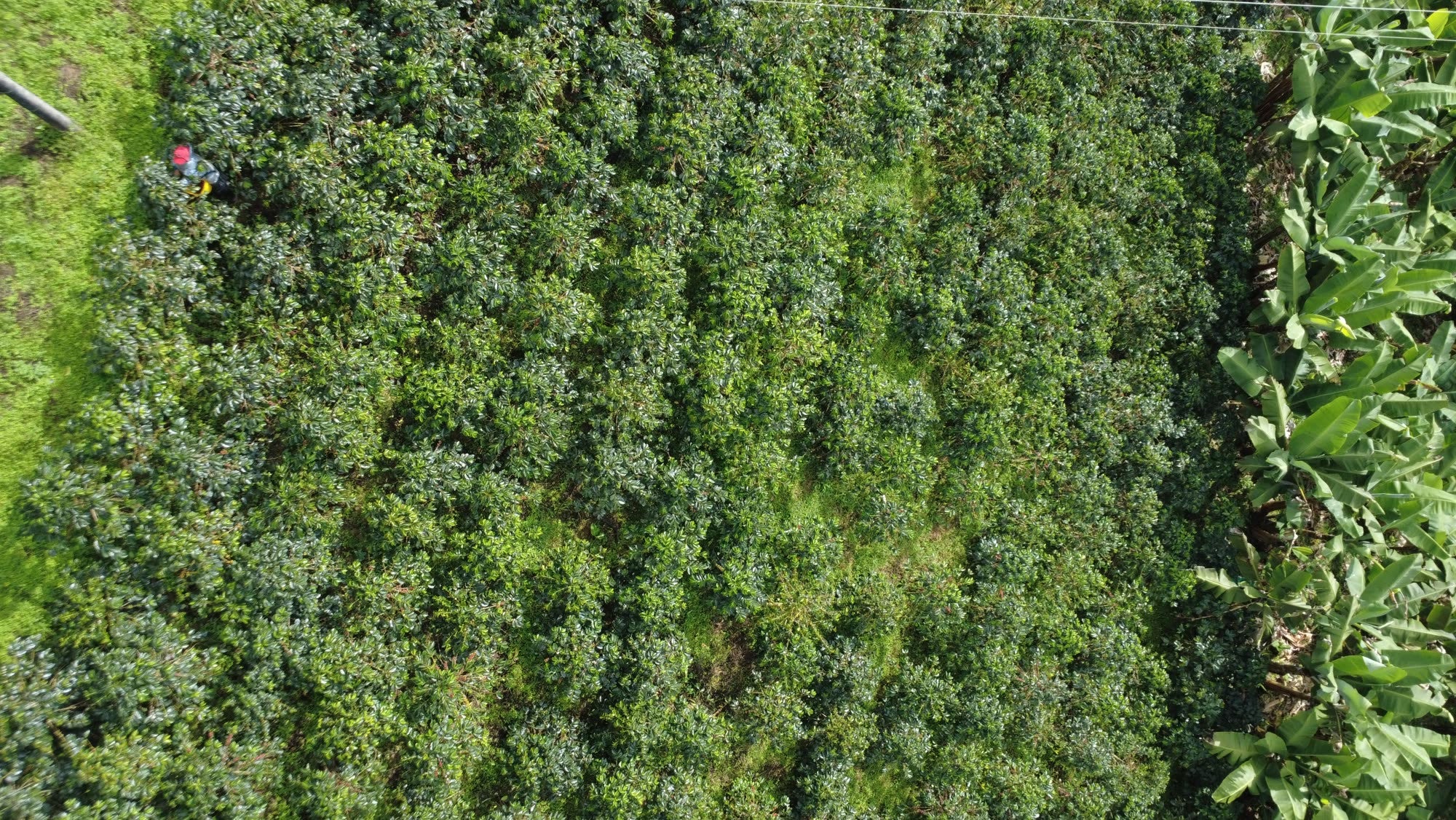
There are eight steps between a red cherry on the branch and a cup of coffee. Seven happen on the farm or close to it, and none can be skipped. Each step can undo the work of the one before, which explains why well-made coffee is uncommon and why it costs what it costs.
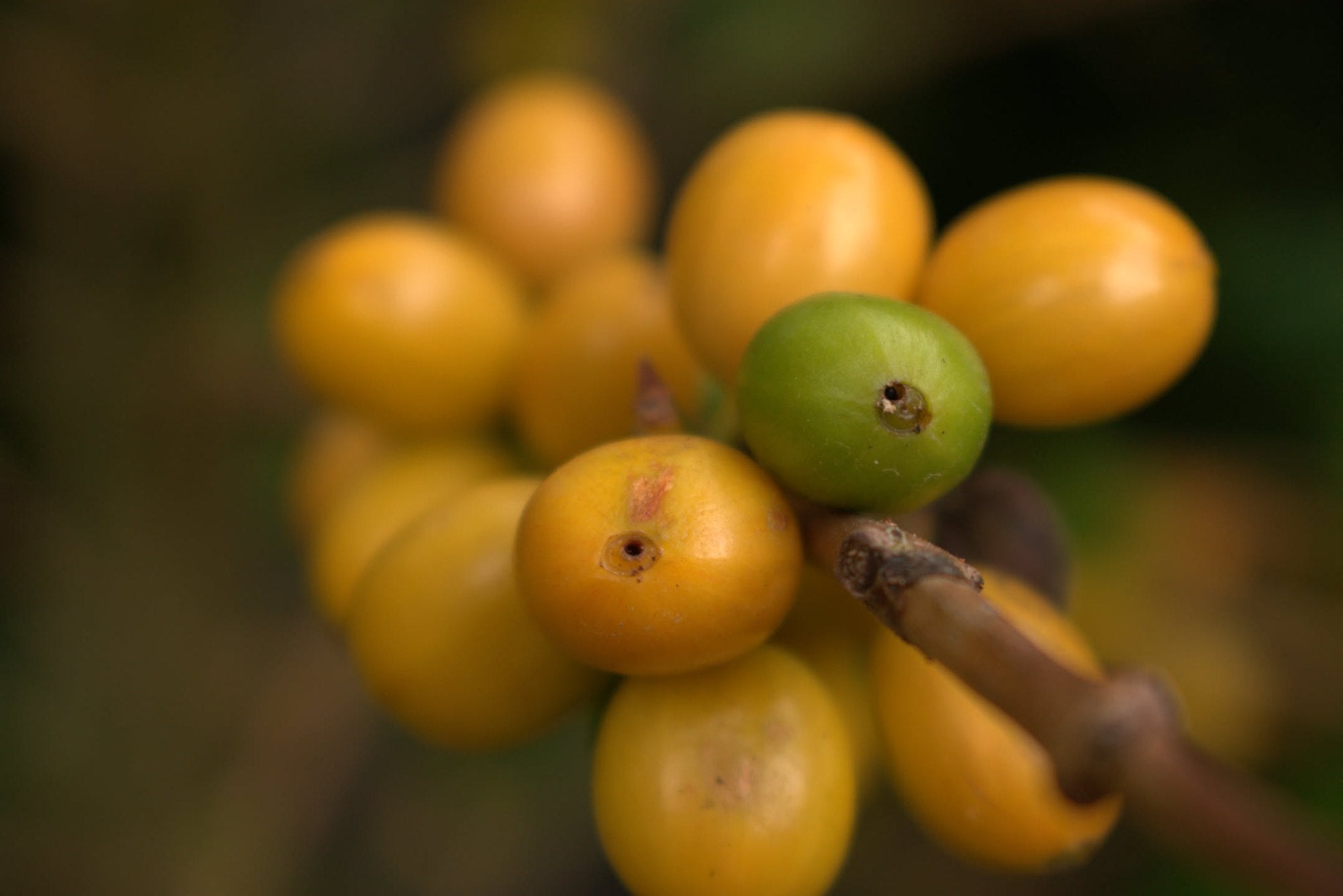
1 · Picking
Coffee does not ripen all at once: on the same branch there are green, half-ripe and ripe cherries. So it is picked by hand and in several passes, taking only the red ones. A green cherry picked in a hurry becomes a defect you taste in the cup two months later.
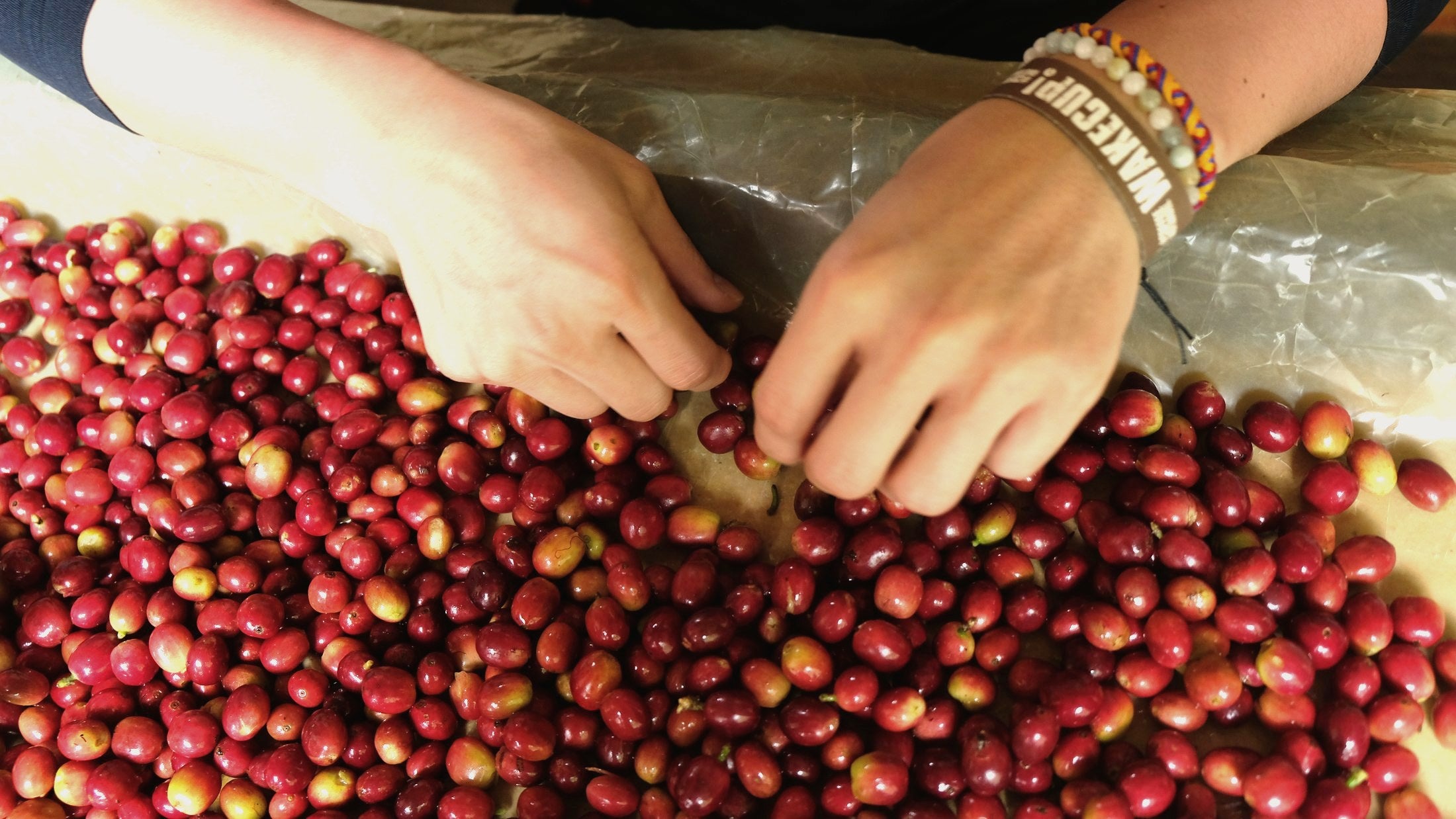
2 · Flotation
The cherries go into water. The ones that float are discarded: they are empty, dry or bored through by the coffee borer beetle. It is a thirty-second quality check done with a bucket, and it separates the good coffee from the coffee that never will be.
3 · Pulping
The pulper strips the skin and the pulp off the cherry and leaves the bean covered in mucilage. In the natural process this step does not exist: the whole cherry is dried.
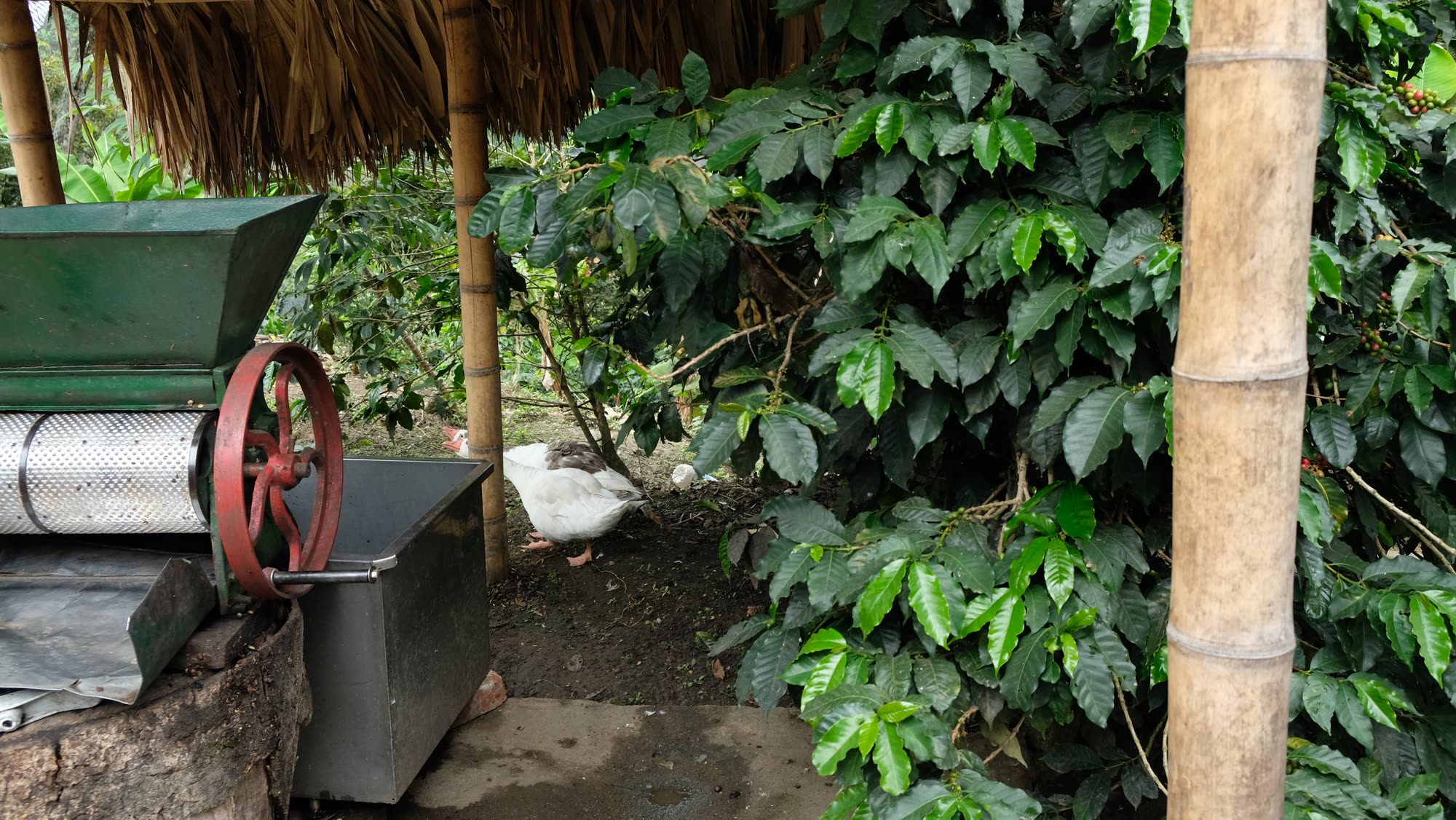
4 · Fermentation
The bean rests and the mucilage breaks down. This is where much of the flavour is decided, and where the clock rules: 18 to 20 hours for a washed, 36 for a honey, 80 for a natural. A few hours too many and the coffee is over-fermented; a few too few and it never got anywhere.
5 · Drying
The bean has to come down to around 11 % moisture. In the sun, in parabolic dryers, that takes 3 to 4 days for a washed and up to 12 to 15 for a natural. It has to be turned so it dries evenly. It is the longest step and the one most exposed to the weather: it is where lots are lost.
6 · Hulling
The dried bean still has a husk, the parchment. Taking it off reveals green coffee, which is how coffee travels and is traded around the world. Well-made green coffee keeps for months.
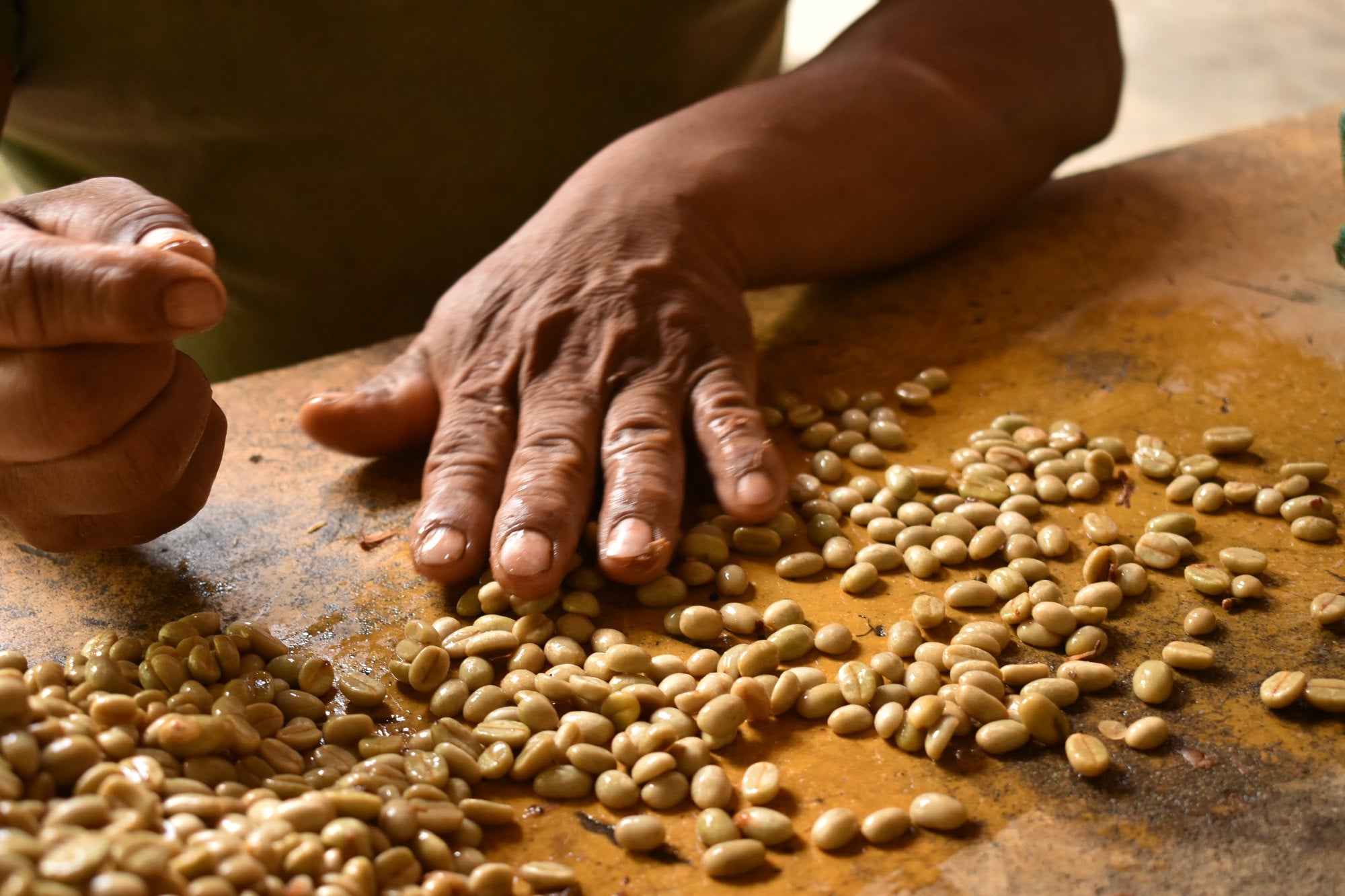
7 · Roasting
Green coffee does not smell of coffee: it smells of grass. Every aroma you know appears in the roast, in a few minutes of controlled heat. Each roast profile —lighter, darker— draws different things out of the same bean, and a badly handled roast covers a year of work in five minutes.
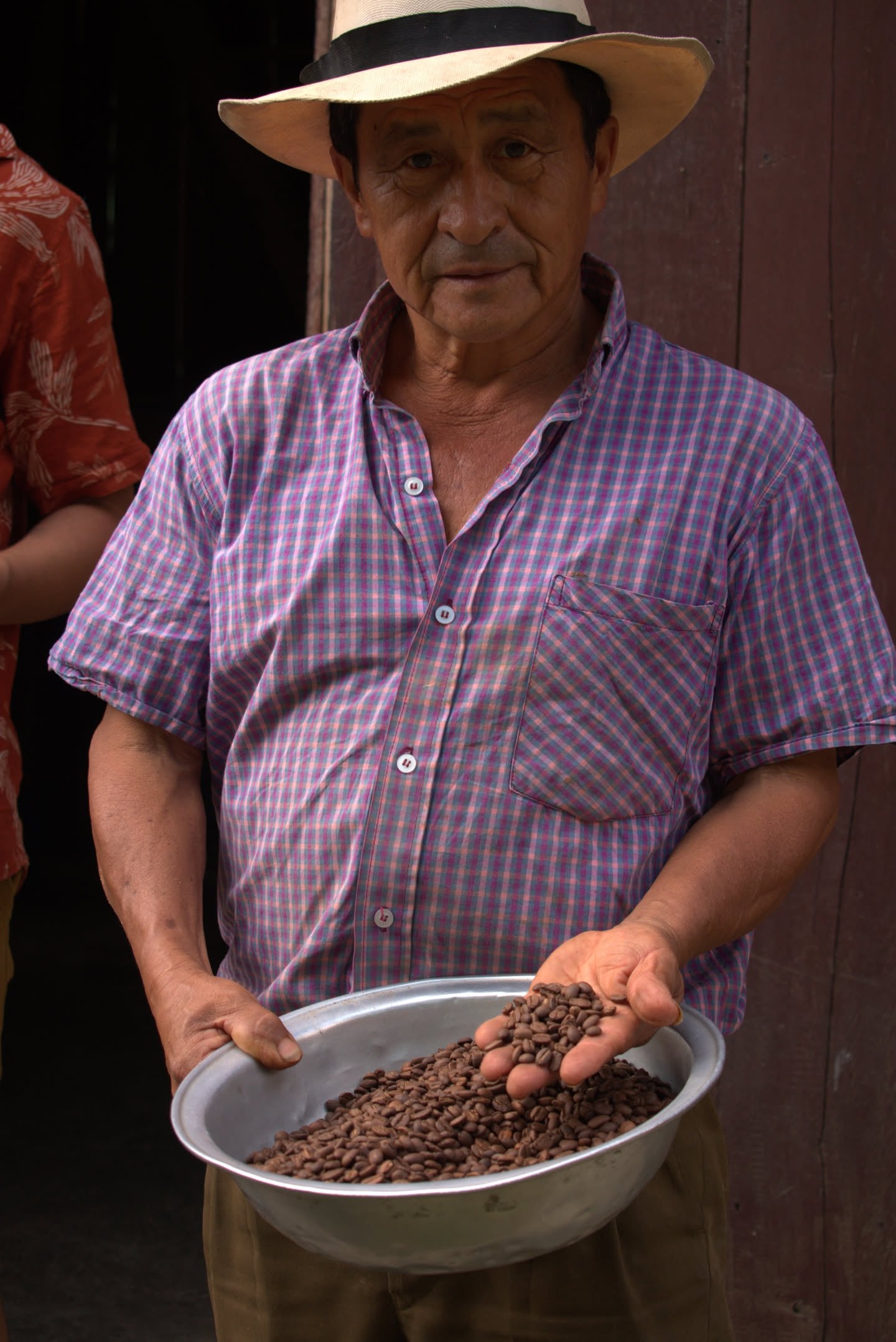
8 · Grinding
The last step, and the only one that happens in your kitchen. Ground coffee loses its aroma in minutes, not days: that is why whole beans keep far better than ground, and why it is worth grinding right before brewing.
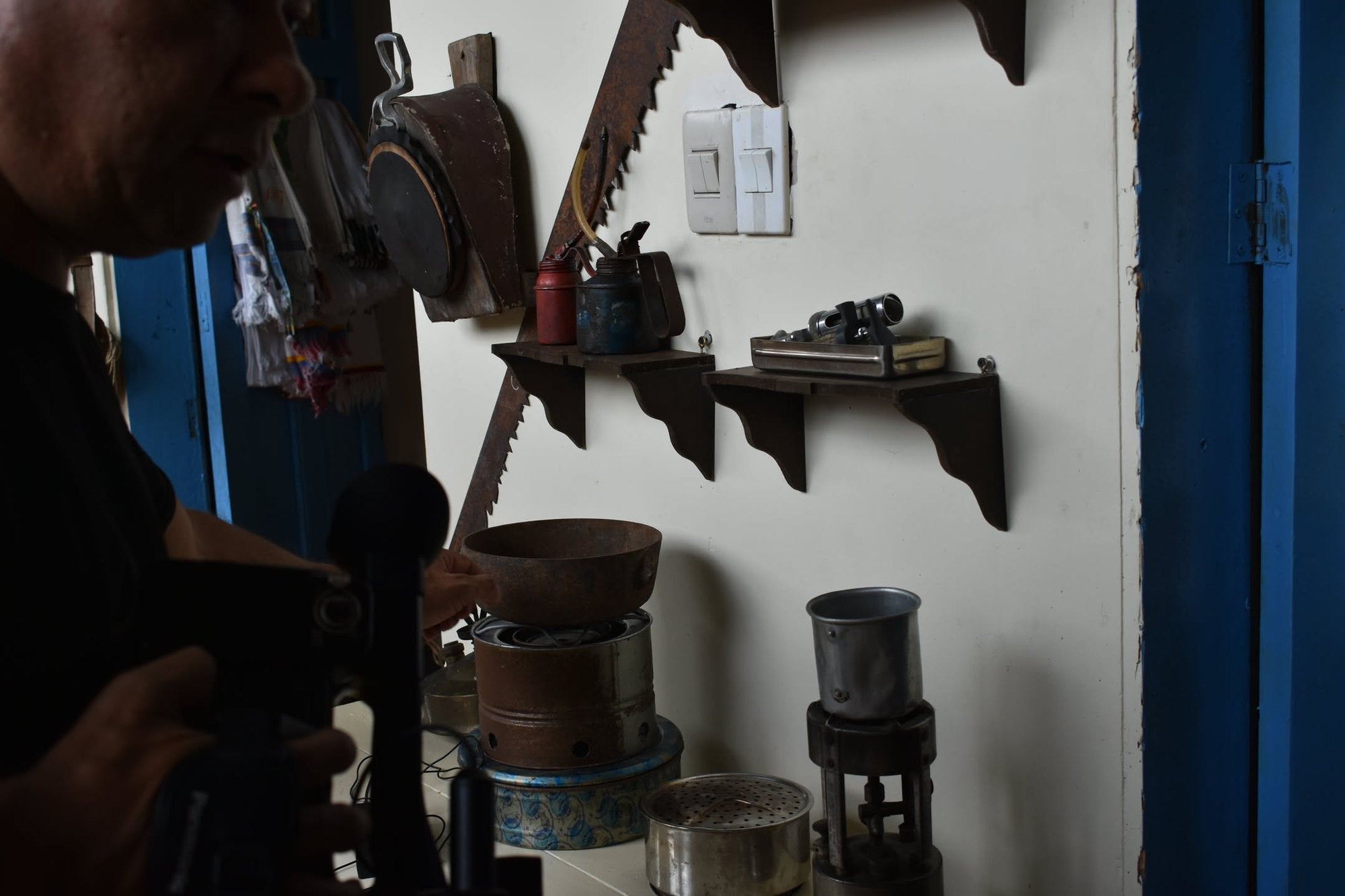
What is behind one pound
At Villa Gloria these steps are done by the same family: León Campo, his wife and two of his four children. The farm produces around 80 pounds of specialty coffee a month, split across the three processes. The main harvest runs from March to May, and the second one —la traviesa— falls in November and December. In August, September, January and February there is no harvest.
Eight steps, and seven are over before the coffee leaves the mountain. When you buy single-origin coffee, almost everything you are paying for had already happened before the bean was roasted.