Washed, honey and natural are three ways of taking the fruit off a coffee bean, and each one leaves a different coffee. It can be the same tree, the same variety, the same slope and the same harvest: if the process changes, the cup changes. What separates them is time — how many hours it ferments and how many days it dries.
One thing helps to understand it: the coffee bean is the seed of a fruit. The cherry has skin, sweet pulp and a sticky layer called mucilage. The three processes are three decisions about how much of that sweetness is allowed to touch the seed, and for how long.
The three, in one table
| Process | What is done | Fermentation | Drying in the sun |
|---|---|---|---|
| Washed | pulped and washed before the mucilage passes on its sweetness | 18 – 20 hours | 3 – 4 days |
| Honey | dried with part of the mucilage still on | 36 hours | 5 – 6 days |
| Natural | the whole cherry, unpulped | 80 hours | 12 – 15 days |
These are the timings of Villa Gloria farm, in Pijao. On other farms and at other altitudes they change.
Washed: the cleanest
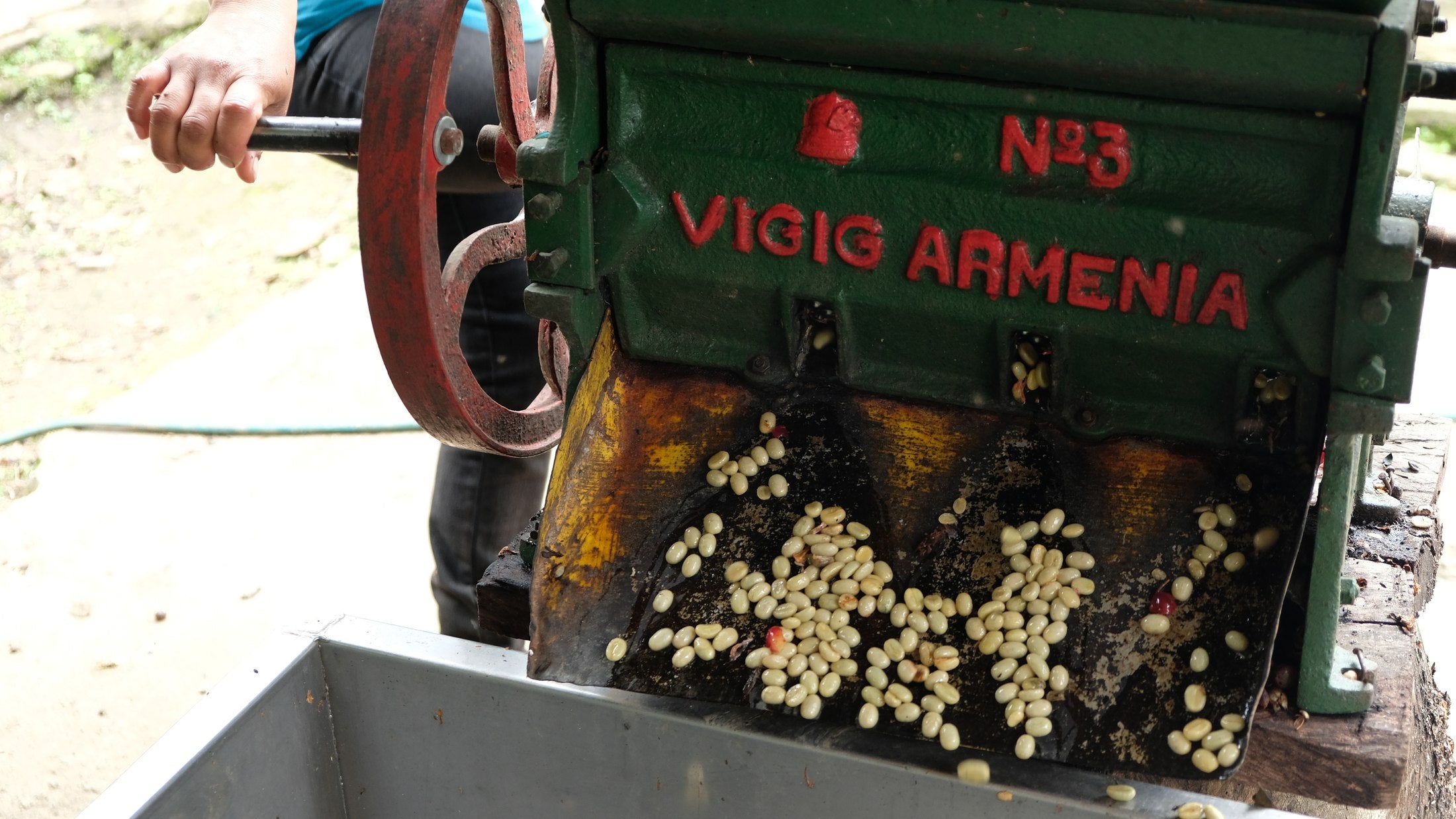
The cherry is pulped and ferments briefly —between 18 and 20 hours— and is then washed. Fermentation is stopped before the mucilage passes its sweetness on to the bean. It dries fast, in 3 or 4 days.
The result is the cleanest and most defined of the three: the acidity shows, the variety shows, the altitude shows. It is the process that hides the least — and therefore the one that gives away a mistake soonest.
Honey: the sweetness left on the bean
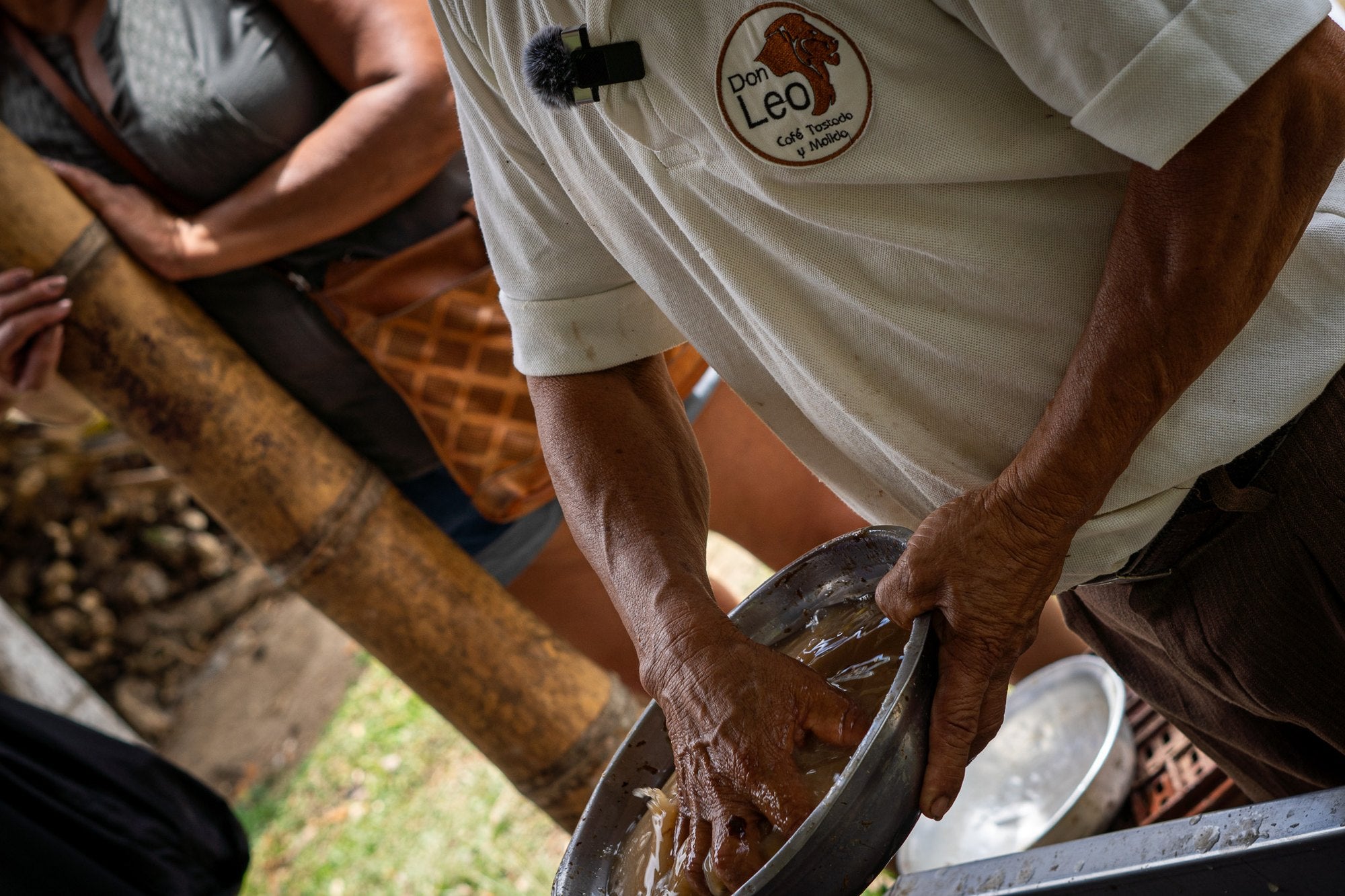
Here it is not fully washed. It is pulped and laid out to dry with part of the mucilage still on. That sticky layer —nothing to do with bees, despite the name— ferments more slowly, 36 hours, and dries in 5 or 6 days.
It gives a coffee with more body and more sweetness than the washed, without the intensity of the natural. It is the middle ground, and it is more delicate than it looks: the mucilage has to be watched.
Natural: the whole cherry
The oldest process and the riskiest. The whole cherry, unpulped, is laid in the sun to dry with all its fruit on. It ferments 80 hours —four times the washed— and takes between 12 and 15 days to dry, depending on the weather.
It is the most intense of the three and the one most at the mercy of the sky. Two weeks of drying are two weeks in which it can rain, and if it rains badly the lot is lost. When it comes out well, it tastes like no other coffee.
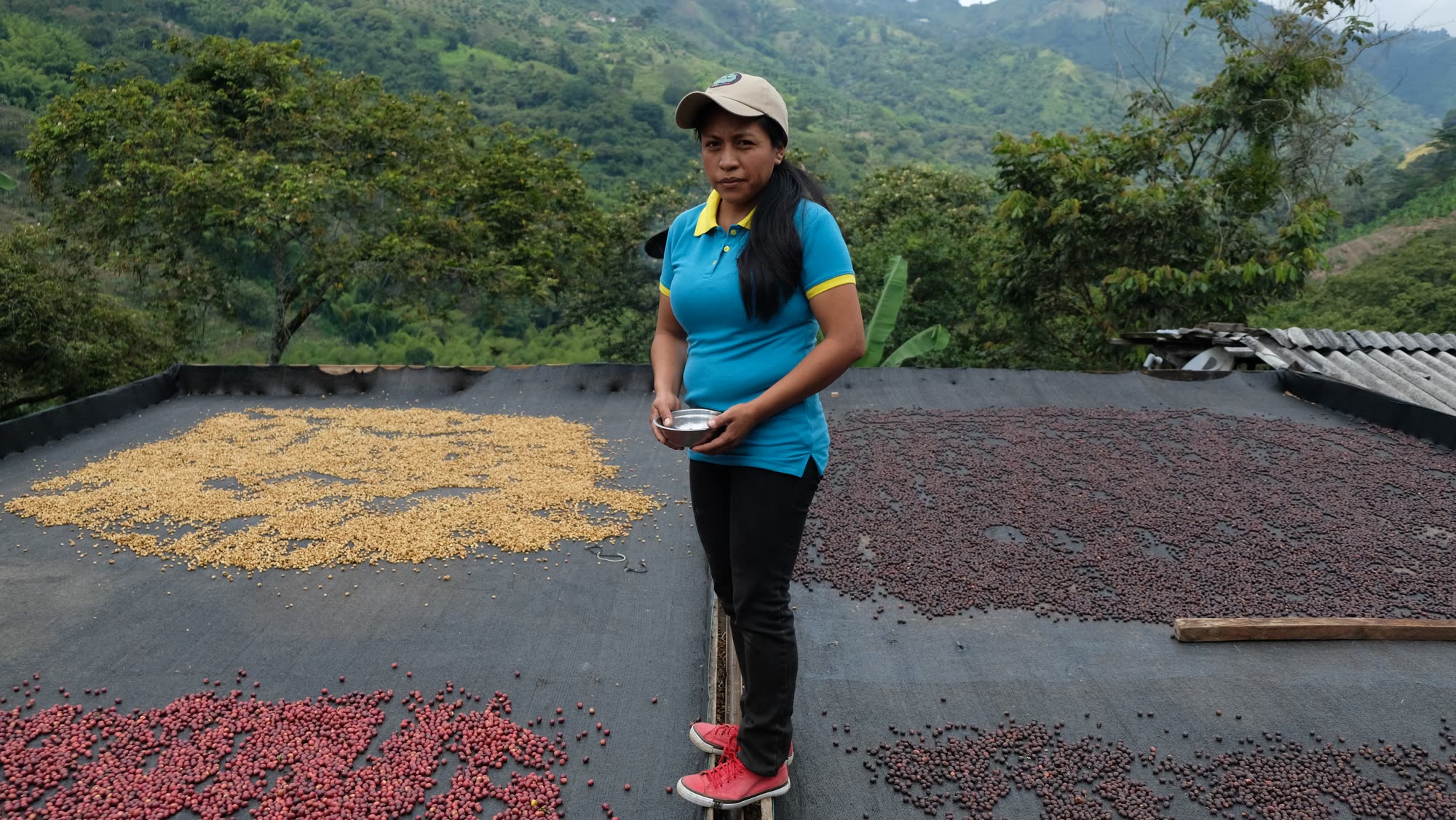
Why drying decides so much
A whole year of work can be ruined in the drying. At Villa Gloria it dries in the sun, in parabolic dryers —covered tunnels that let the light through and keep the rain off— and the beans have to be turned so they dry evenly. A badly dried bean spoils in storage weeks later, when nobody is watching any more.
Three coffees from the same plant that taste nothing alike. The whole difference is how many hours it ferments and how many days it sees the sun.
The three are set out side by side on the traceability page.