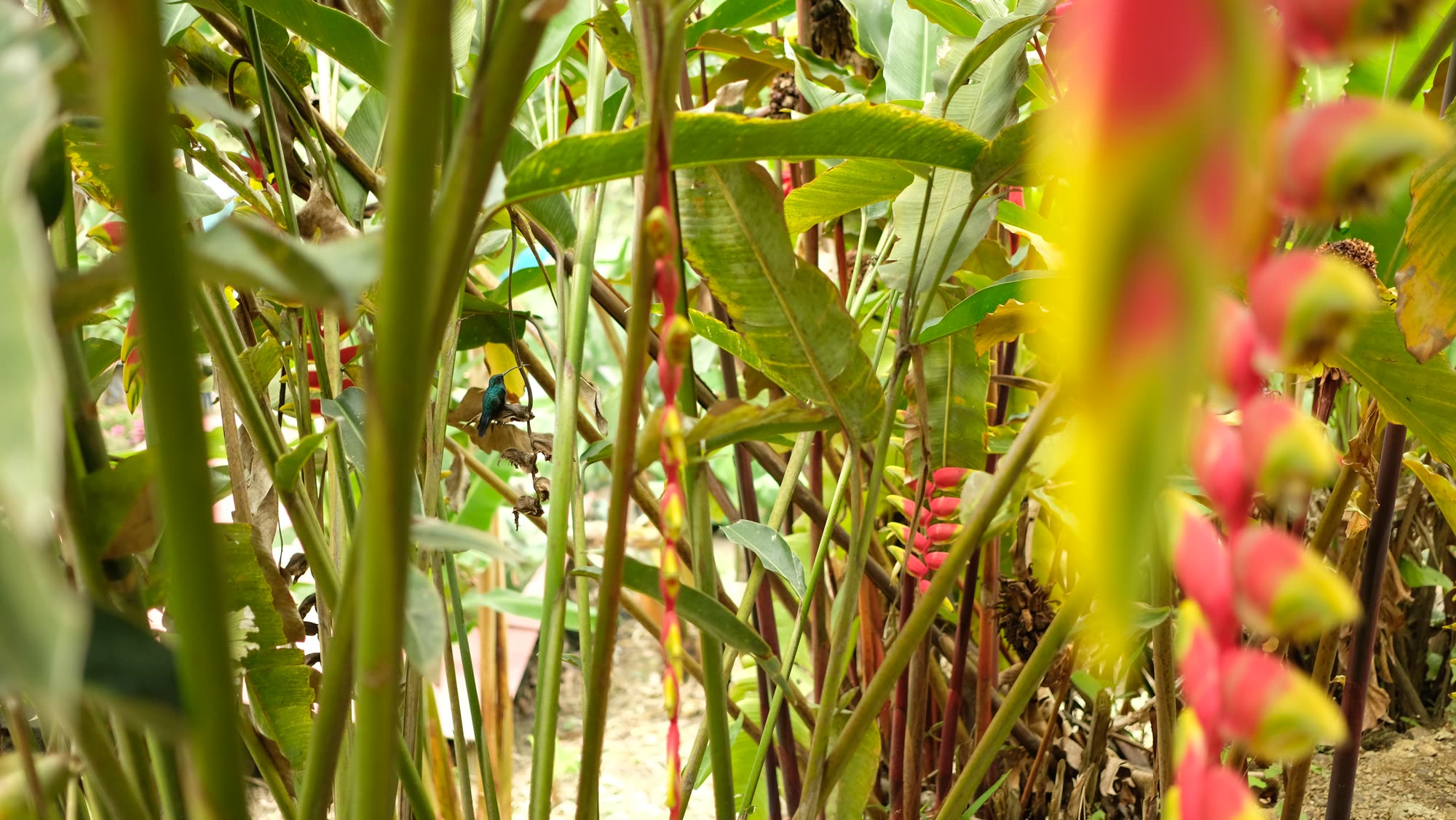
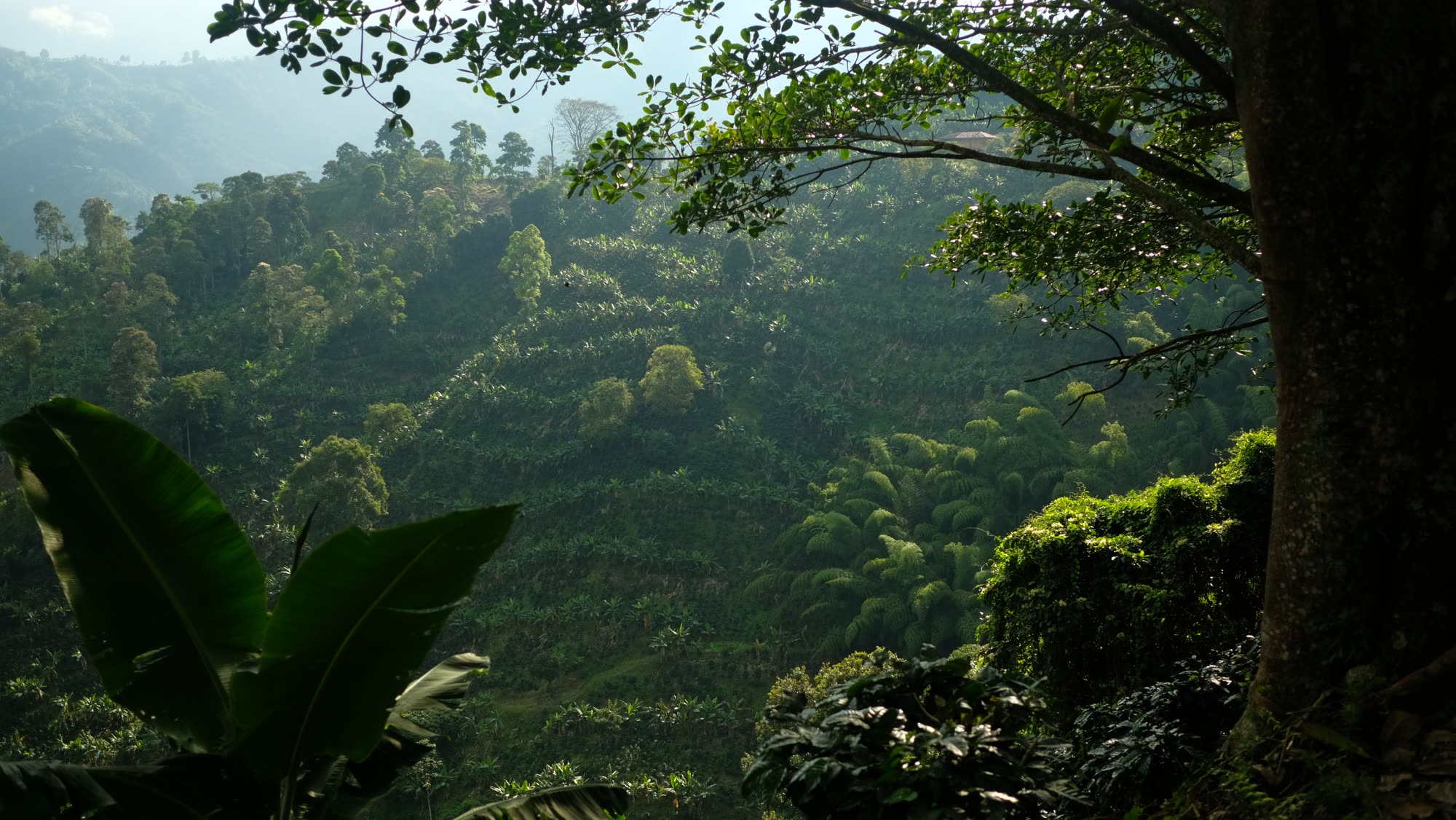
Shade-grown coffee is coffee planted under other trees rather than in full sun. It is the traditional way of growing it in the mountains of Colombia, and today it is also a deliberate decision: it yields fewer kilos per hectare and better coffee.
The reason is the same one that makes altitude change the taste: shade lowers the temperature by a few degrees, the fruit ripens more slowly, and that slowness concentrates sugars and acids in the bean. Shade is, in practice, a way of climbing the mountain without moving.
What shade does, point by point
| Effect | What it brings |
|---|---|
| Lowers the temperature | slower ripening, more sweetness and acidity |
| Holds moisture | less water stress in the dry weeks |
| Leaf litter feeds the soil | less bought fertiliser |
| Roots hold the slope | less erosion in heavy rain |
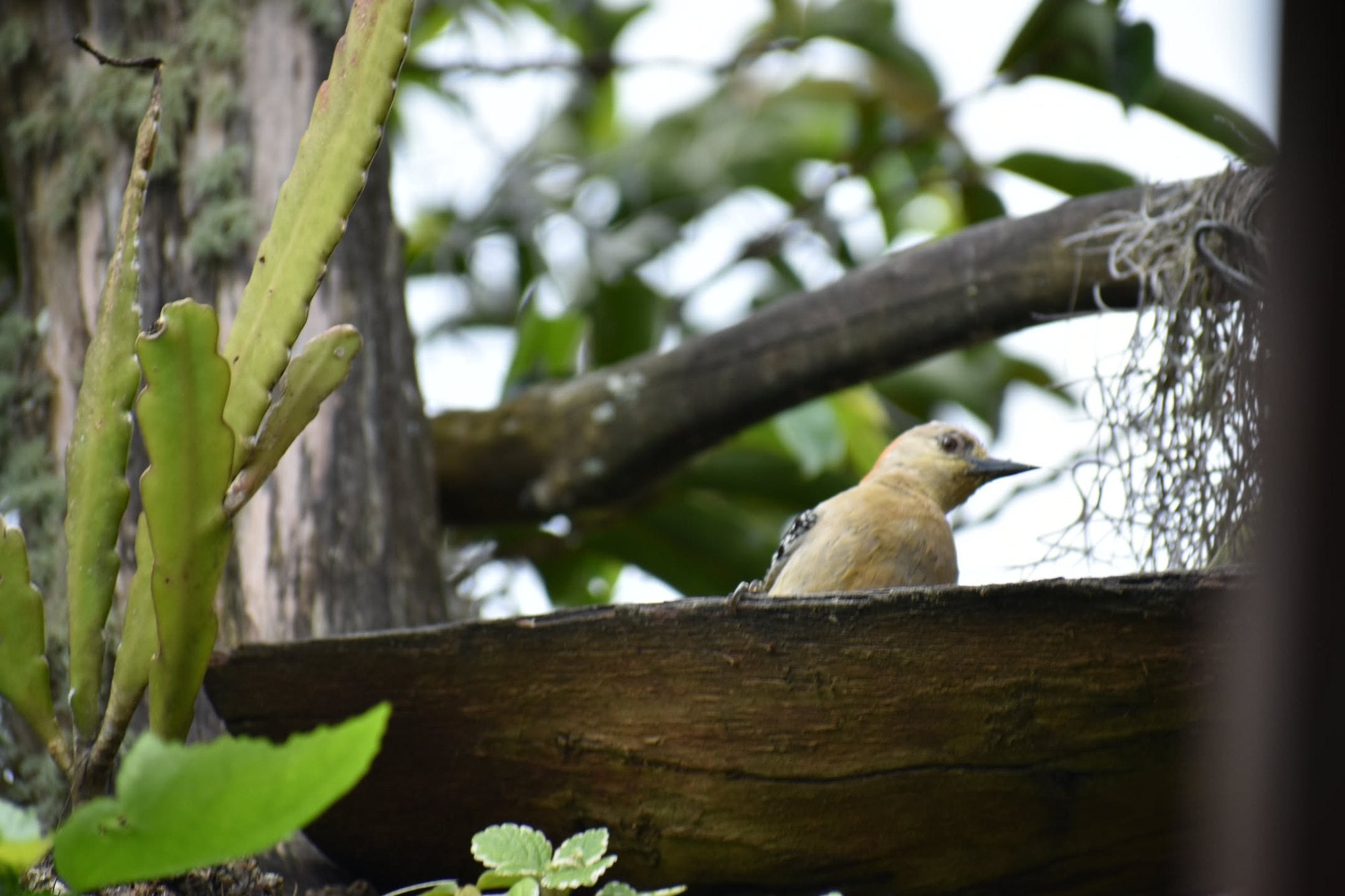
| Structure for wildlife | birds and insects that keep pests down |
What it costs
A well-fertilised coffee plot in full sun produces more. That is the uncomfortable truth, and the reason much of the world's coffee moved into the sun: more plants per hectare, more kilos, more income per hectare in the short term.
What that calculation leaves out is that a full-sun plot demands more inputs, exhausts the soil sooner and leaves the slope with nothing holding it. Shade is an investment paid back over decades, not harvests — and for that you have to own the farm, not rent it.
The birds that stay
A shaded coffee plot still works as woodland for many species. Quindío has 642 recorded bird species, and that figure does not survive in a bare monoculture. Biodiversity is not decoration for the story: it is the birds and the insects that eat the pests you would otherwise have to fight with chemicals.
It is also what holds up the landscape that UNESCO listed as a World Heritage Site in 2011 — the Coffee Cultural Landscape. It is not a protected park: it is farms at work.
How it shows in the cup
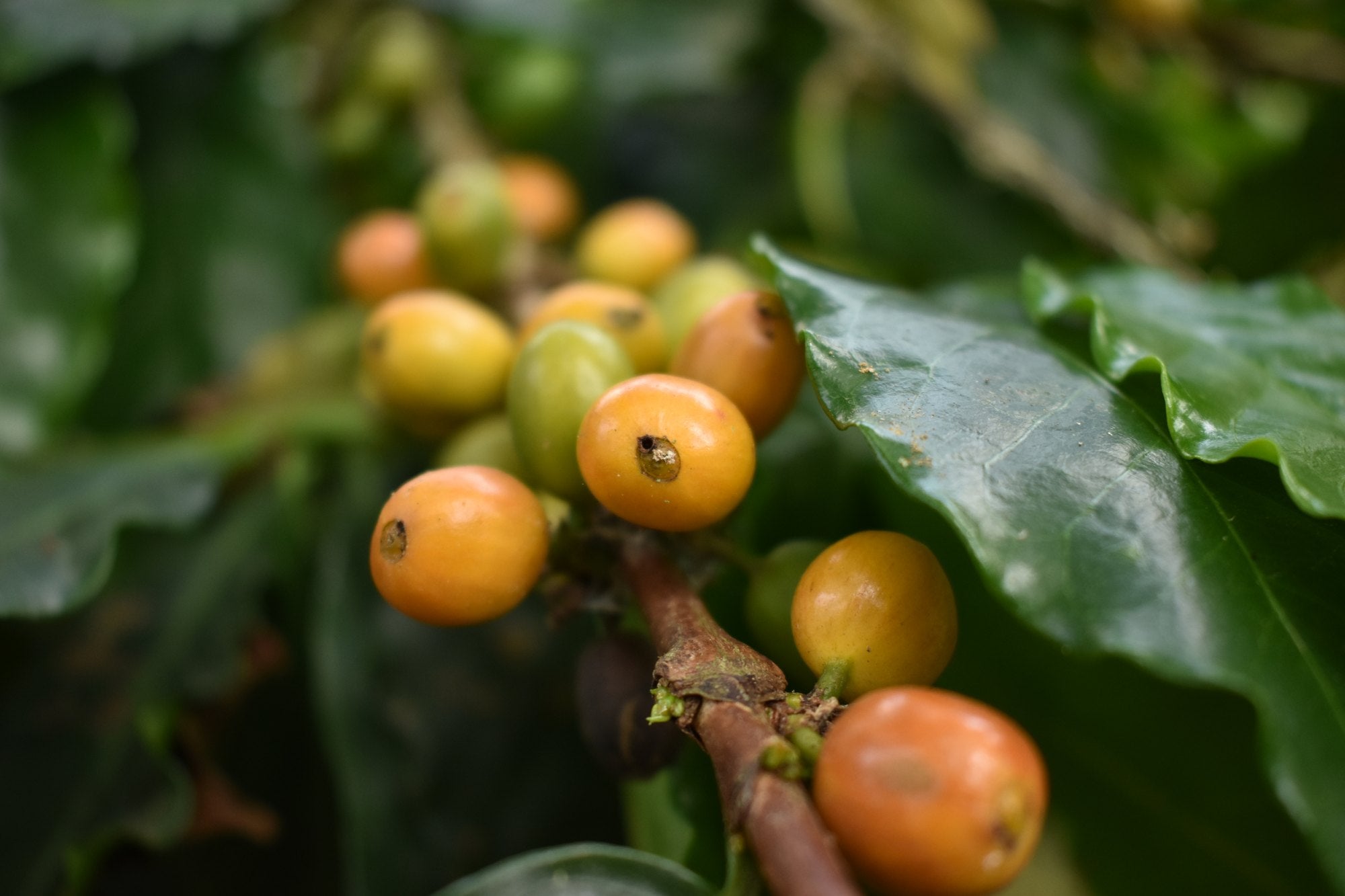
There is no «shade flavour». What there is is a denser and more even bean, one that takes the roast better and gives a cup with more sweetness and more definition. In a single-origin coffee, shade is one of the reasons the stated altitude turns into something you can actually taste.
Shade is the decision to produce less coffee, better, on a farm thought of in decades rather than harvests.